
The gems and jewellery industry anticipates challenging times following the government's decision to increase gold import duty to 15 per cent, a move that exporters warn could fuel the grey market and heighten smuggling risks.

NITI Aayog Member Rajiv Gauba has detailed an extensive deregulation agenda, moving India towards a 'permitted unless prohibited' principle to dismantle new forms of the Licence Raj and clear 'regulatory cholesterol' for businesses.

The Indian government is set to accelerate reforms, including measures to enhance foreign direct investment, speed up divestment, and boost asset monetisation, to maintain economic growth despite rising fuel and fertiliser import costs driven by the West Asia crisis.

Mahindra & Mahindra Ltd reported a significant 48.5 per cent jump in consolidated profit after tax to Rs 5,259.91 crore in the March quarter, primarily attributed to strong performance in its auto and farm sectors, alongside ambitious plans for new SUV and EV launches.

India's consumption stocks, which have outperformed the broader market, are now facing significant pressure due to a gradual rise in fuel prices and the potential for higher inflation. Analysts warn that companies may be forced to pass on increased input costs to consumers, potentially hurting demand across both staples and discretionary categories, with a looming threat of deficient monsoon rainfall further exacerbating inflationary concerns.

The Mumbai-Ahmedabad bullet train project has achieved a significant milestone with the excavation of a mountain tunnel in Palghar, Maharashtra, marking the third such achievement in the district within the last five months. This progress underscores the rapid construction pace in a geographically challenging section of the high-speed rail corridor.

Indian mutual funds have significantly reduced their exposure to the information technology (IT) sector, with holdings now at an eight-year low of 6.7% in April 2026, driven by weak earnings growth, global demand slowdown, and concerns over AI-led disruption.
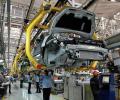
India's passenger vehicle (PV) industry is projected to experience moderated growth in FY27, following a strong rebound in H2FY26, primarily due to the high base effect, absorbed pent-up demand, and the lingering impact of geopolitical tensions in West Asia.

Indian oil marketing companies are incurring significant losses, selling petrol at a Rs 14 per litre loss and diesel at Rs 18 per litre, as elevated global crude oil prices, exacerbated by the West Asia crisis, outpace capped retail fuel rates, according to rating agency Icra.

Indian stock markets experienced a significant sell-off, with the Sensex tumbling over 1,300 points, driven by escalating crude oil prices due to US-Iran tensions and Prime Minister Narendra Modi's call for austerity measures, which amplified investor concerns about India's economic outlook.

Indian pharmaceutical companies are strategically increasing investments in the US market, focusing on specialty drugs, complex generics, respiratory products, and local manufacturing, despite a nearly 10 per cent fall in exports to the US in FY26 due to pricing pressure and competition in traditional generics.

India's two-wheeler industry is seen growing 6-9% in 2026, though a proposed ABS mandate for sub-125cc models could push up prices and temper volumes.

India's leading passenger vehicle manufacturers are significantly increasing investments and factory capacities, alongside planning major product launches for FY27, driven by strong confidence in sustained domestic demand growth despite global geopolitical tensions and supply chain risks.

Indian IT stocks have seen a significant decline of up to 33 per cent year-to-date in 2026, largely due to artificial intelligence (AI) disrupting traditional outsourcing models, leading analysts to predict a challenging FY27 for the sector despite some cushion from rupee depreciation.

India's five publicly listed Real Estate Investment Trusts (REITs) collectively distributed more than Rs 2,566 crore to over 425,000 unitholders in Q4FY26, with a cumulative distribution exceeding Rs 8,900 crore for the full fiscal year.

Analysts are increasingly optimistic about India's capital markets, with HDFC AMC, CAMS, and KFin Technologies identified as top investment picks. This optimism stems from a structural shift in household savings towards financial instruments and an expected multi-year earnings expansion for market infrastructure providers and asset management companies.

Sun Pharmaceutical Industries' acquisition of US-based Organon & Co. for $11.75 billion, the largest overseas acquisition by an Indian pharma company, has been met with mixed reactions from brokerages, who see strategic entry into women's health and biosimilars but also flag potential integration challenges and debt concerns.

Air India has deferred annual salary increments for its staff by at least one quarter and urged a "relentless focus on costs" due to external headwinds like the closure of Pakistan airspace, West Asia conflict, rupee depreciation, and a significant surge in aviation turbine fuel prices, though the airline has assured there will be no layoffs.
Uncertainties stemming from the West Asia crisis and its potential impact on inflation and economic growth were key factors in the Reserve Bank of India's Monetary Policy Committee (MPC) decision to maintain the status quo on interest rates, according to the recently released MPC meeting minutes.

India is closely monitoring Sri Lanka's decision to offer foreign investors control of an airport near the China-controlled Hambantota port, as it could present a rare opening for Indian firms seeking strategic footholds in the Indian Ocean.

TVS Motor Company is strategically positioned for sustained outperformance in the domestic two-wheeler industry, propelled by increasing market share in scooters, premium motorcycles, electric vehicles (EVs), and robust export growth, according to analysts.

Despite a sharp increase in import duties on gold and silver to 15 per cent, the precious metals are trading at significant discounts in the domestic market, with gold seeing discounts of up to $200 an ounce and silver up to $6 an ounce.

Sun Pharmaceutical Industries reported strong consolidated numbers for Q4 FY26, with net profit rising 26 per cent year-on-year to 2,714 crore, despite continued weakness in its US generics business. Growth in innovative medicines and increased R&D investments are helping to offset these pressures.

Pharmaceutical major Cipla reported a 3 per cent year-on-year decline in March quarter revenue to Rs 6,541 crore, with net profit falling 55 per cent to Rs 554.6 crore, missing consensus estimates. Despite strong growth in India and Africa, a significant decline in North American sales impacted overall performance, with the company now focusing on new product launches and regulatory filings to drive future gains.
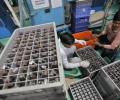
Escalating geopolitical tensions in West Asia are beginning to disrupt India's automotive supply chain, leading to rising commodity prices, logistics bottlenecks, material shortages, and pressure on consumer demand, with two-wheeler makers already raising prices.

Reliance Industries' digital arm, Jio Platforms, may see its initial public offering (IPO) delayed to the second half of fiscal 2027, according to CreditSights. The delay is primarily attributed to ongoing geopolitical tensions in the Middle East, which could impact market conditions and investor sentiment.

Bank of Baroda economists project India's GDP to grow 6.5-6.8 per cent in FY27 but warn that the fiscal deficit could overshoot the budgeted 4.3 per cent target, potentially reaching 4.7-4.8 per cent of GDP due to subsidy overruns, excise duty cuts, and oil marketing company losses.

India's wholesale price inflation surged to 8.30 per cent in April, up from 3.88 per cent in March, primarily driven by a significant increase in the prices of fuel, power, and crude petroleum, according to data from the commerce and industry ministry.

Reliance Industries Limited (RIL) faced a challenging fourth quarter, with its energy business experiencing significant headwinds, leading to overall muted results and prompting analysts to adjust their outlook, even as consumer segments like Jio and retail demonstrated robust growth.

India's core sector output contracted by 0.4 per cent in March, marking the first decline in five months, with coal, crude oil, fertiliser, and electricity production falling, according to official data.

Indian investors have seen their wealth erode by a staggering Rs 16.77 lakh crore over four trading sessions, as the markets faced deep losses driven by elevated crude oil prices, geopolitical tensions, persistent foreign fund outflows, and a record-low rupee.
India Ratings and Research predicts the Reserve Bank of India (RBI) will maintain the repo rate at 5.25 per cent throughout FY27, despite potential inflationary pressures from higher fuel prices, with inflation expected to remain within the central bank's tolerance band.

India's largest private refiner, Reliance Industries Ltd, successfully navigated a volatile energy market in the last quarter of FY26 by diversifying crude sourcing and demonstrating operational agility, particularly in response to geopolitical disruptions and cost fluctuations.

India's economy is projected to maintain growth above 7 per cent in 2026-27 (FY27), supported by strong domestic consumption and investment, even as global growth faces risks from geopolitical tensions, according to industry body Assocham.

Indian foreign direct investment (FDI) in the United States has reached approximately USD 16.4 billion, supporting around 70,800 jobs and contributing significantly to research and development, according to US Deputy Undersecretary Brandon Remington.

Banks are witnessing a surge in hiring for sales staff in secured segments such as home, vehicle and gold loans as compared to the recovery category, driven by a boost in business growth, and a host of regulatory measures aimed at improving ease of doing business, according to industry experts.

India's exports recorded a 13.78 per cent increase to USD 43.56 billion in April, marking the highest monthly outbound shipments in over four years, primarily driven by petroleum products. However, the trade deficit widened to a three-month high of USD 28.38 billion due to a 10 per cent rise in imports.

The Indian rupee depreciated 20 paise to close at a fresh all-time low of 94.88 against the US dollar, driven by surging Brent crude oil prices, hovering around USD 115 per barrel, and persistent foreign capital outflows.

'...the enormous responsibility and faith the youth has put on his shoulders, that he is going to solve their problems.'

The rupee recovered to 95.18 against the US dollar after hitting an all-time intra-day low of 95.44. The recovery was supported by possible RBI intervention amid renewed Gulf tensions and rising crude oil prices.
